
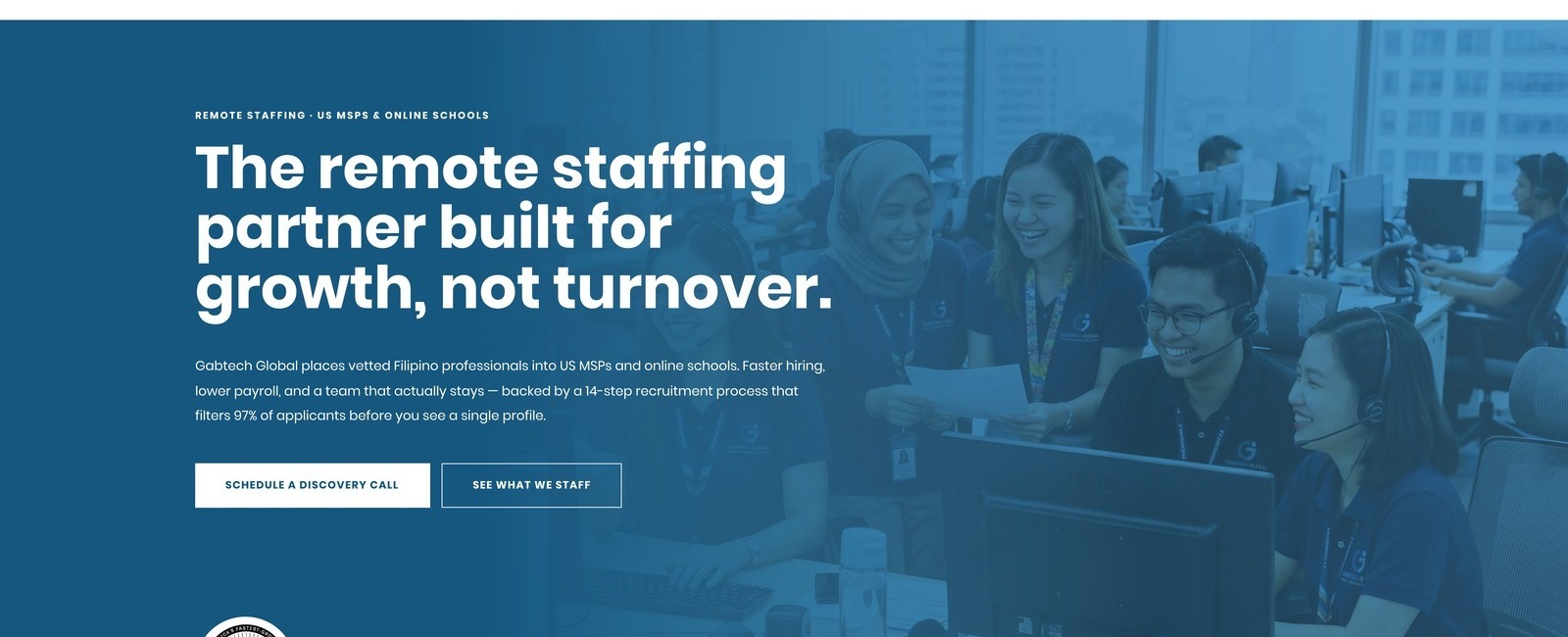

Gabtech Global had the proof, the growth, and the clients. The website buried all of it under language about Gabtech instead of the buyer. Here is what changed, and why the redesign was the smallest part of it.
Gabtech Global is an Inc. 5000 company: #557 in 2025, 735% three-year growth, 100+ active clients, around 350 consultants in the Philippines. The operation works. But the homepage led with “Grow Your Team Globally With Us” and a list of Gabtech’s internal principles. It read like every other outsourcing firm. The request that came in sounded like a design problem: make it look better. The real problem was that a high-performing company had built a website that made it sound average.
MSPs and online schools don’t shop for a staffing vendor. They are trying to stop losing accounts they can’t cover, stop missing enrollment targets they can’t proctor, stop watching turnover destroy the ROI of every hire. The old site answered a question the buyer wasn’t asking. “What does Gabtech do?” It organized everything around Gabtech’s own principles: seamless transition, low risk, full control. The new strategy starts where the buyer already is: the hiring problem is the growth problem. Every section after that earns its place by proving that one idea.
We led with “the hiring problem is the growth problem.” Staffing buyers aren’t shopping for a vendor. They’re trying to stop revenue from leaking. Naming that reframe positions Gabtech as the fix for a growth problem, not a line item on a services menu.
Three buyer pains come first: vacant seats cost more, competitors staff faster, turnover kills ROI. The reader sees their own situation on the page before Gabtech says a word about itself. Recognition earns the right to make a claim.
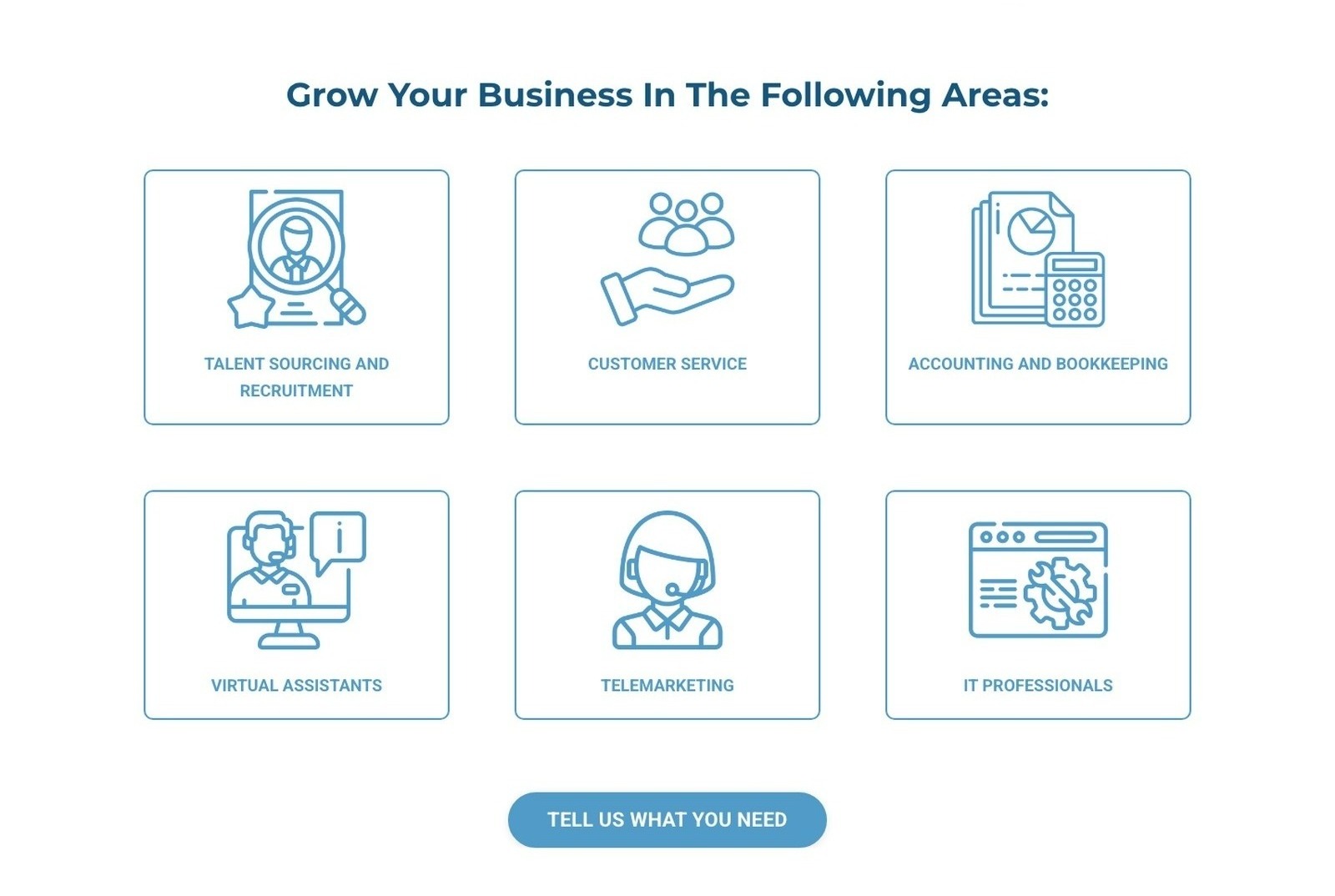
The old site offered six services to anyone. The new strategy commits to MSPs and online schools, each with a dedicated playbook and a concrete client example. Specificity reads as expertise. “Helpdesk with ConnectWise experience” beats “we do IT.”
The 15-step process, 90%+ retention, and pay-on-time principle are framed as a machine that produces consultants who stay. The difference is the system, not the sales pitch. Evidence sequenced to build belief instead of sitting in a logo bar.
The strategy fixes the exact failure discovery surfaced. A visitor now sees their own problem named on the page, sees Gabtech’s proof framed as the answer, and reaches a call to action that filters for fit instead of begging for a click.
That is the difference between a redesign and a repositioning. Gabtech didn’t need to be reinvented. It needed to be understood, then said out loud in the buyer’s language. That is why we start with strategy before a single pixel moves. The strongest work happens in discovery, not in the design file.
If your site is describing what you do instead of the problem your buyer is stuck on, that is a positioning problem, not a design problem. We find it in discovery, write it into the strategy, and hand design a brief that doesn’t need rewriting.